How to Install a Float Ball Valve for Automatic Tank Water Level Control
Introduction
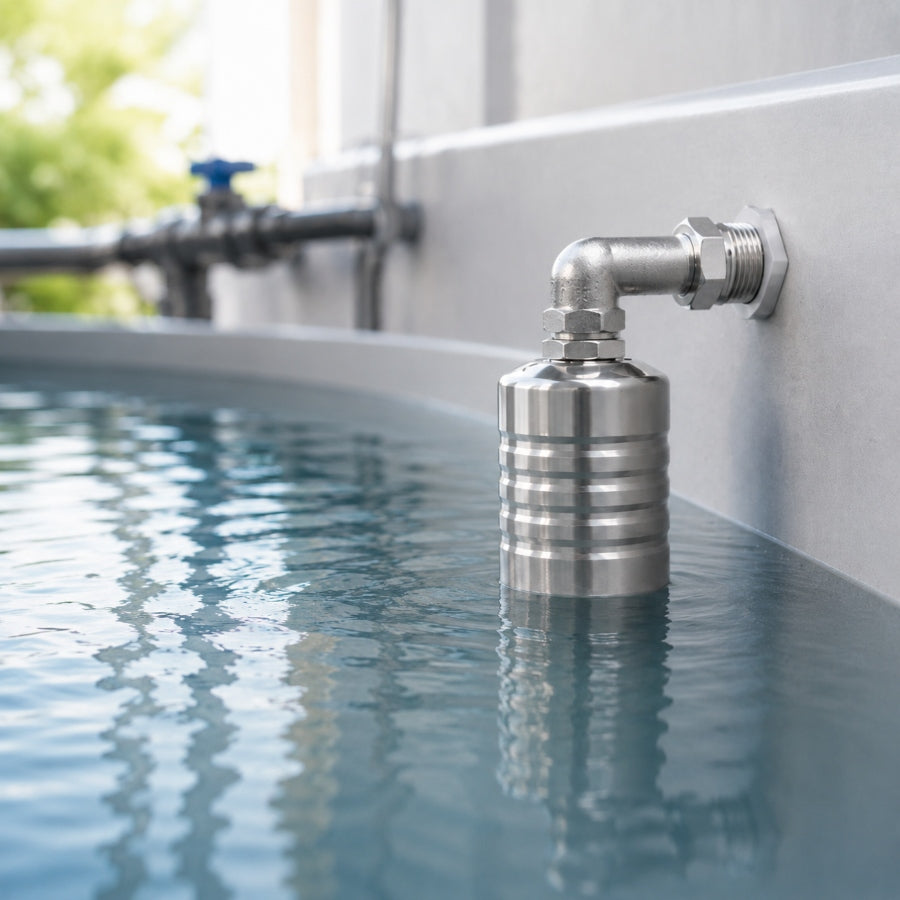
A float ball valve is one of the simplest and most reliable ways to automate water level control in tanks, troughs, cisterns, and pools. Once installed, it opens to let water in when the level drops and shuts off automatically when the tank is full — no electricity, no sensors, no manual checking.
In this guide, we'll walk you through exactly how to install a stainless steel float ball valve so you can set it and forget it.
What You'll Need
- A stainless steel float ball valve (½" or ¾" depending on your inlet pipe size)
- PTFE (Teflon) thread tape
- An adjustable wrench
- A drill with a hole saw bit (if cutting a new inlet hole)
- A bucket or towel to catch residual water
Step-by-Step Installation
Step 1 – Shut off the water supply Before doing anything, turn off the water supply to your tank. If your tank is already full, drain it to a safe working level.
Step 2 – Locate or create the inlet hole Most tanks have a pre-drilled inlet hole near the top. If yours doesn't, use a hole saw bit to drill one approximately 2–3 inches from the top of the tank wall. This ensures the valve has room to float freely.
Step 3 – Wrap the threads with PTFE tape Wrap the male threads of the valve 3–4 times with PTFE tape in the direction of the threads. This creates a watertight seal and prevents leaks.
Step 4 – Thread the valve into the inlet Insert the valve through the hole from the inside of the tank and hand-tighten the lock nut on the outside. Use an adjustable wrench to snug it up — don't overtighten, as this can crack plastic tanks or strip threads.
Step 5 – Adjust the float arm Most float ball valves have an adjustable arm. Bend or slide the arm to set the desired water level — the higher the float sits, the higher the water level will be maintained.
Step 6 – Reconnect the water supply and test Turn the water back on slowly and watch the valve. It should open as the tank fills and shut off cleanly when the float reaches the set level. Check all connections for leaks.
Tips for Best Results
- Stainless steel vs. plastic: Stainless steel valves resist corrosion and last far longer in outdoor or agricultural settings.
- Check the flow rate: For large tanks, choose a valve with a larger bore (¾" or 1") to fill faster.
- Livestock troughs: Install the valve inside a protective cage to prevent animals from damaging the float arm.
When to Replace Your Float Ball Valve
Replace your valve if you notice it dripping when the tank is full (worn seat), if the float arm is bent or cracked, or if the tank is constantly overflowing.